Understanding Scooter Lifts for Trucks
Scooter lifts for trucks are most commonly used by people with limited mobility who need to transport a 3-wheel or 4-wheel scooter to medical appointments, shopping centers, or recreational destinations. Most truck-compatible lifts handle scooters weighing 100 to 400 lbs and require a Class II or Class III 2-inch receiver hitch already installed on the vehicle. The full lineup of scooter lifts includes both platform carriers and interior hoist models, each suited to different storage needs.
Types of Mobility Scooter Lifts
Exterior lifts attach to the truck’s hitch and carry the scooter securely on the outside of the vehicle. A platform allows the scooter to be driven on, then the unit lifts electronically at the push of a button. This style keeps the truck bed clear for other cargo.
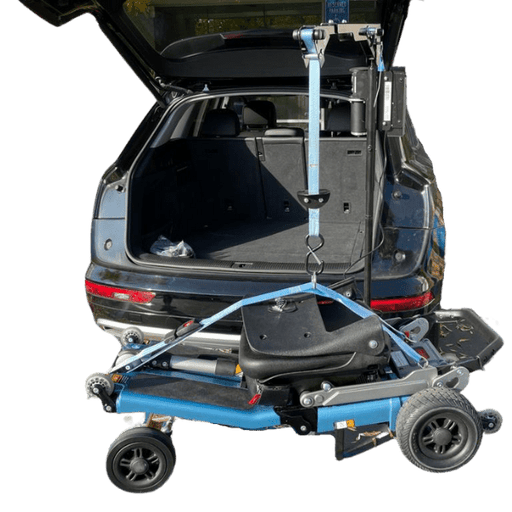
Interior lifts install inside the cargo area and typically use a crane-like mechanism to hoist the scooter over the tailgate. This approach protects the scooter from weather and reduces exposure to theft. A less common option is the fold-down or under-vehicle carrier, which tucks flat beneath the truck frame when not in use and works best for lighter scooters.
Benefits of Scooter Lifts for Trucks
A lift built for scooter transport delivers accessibility that paratransit services and adapted vehicles cannot match, since it lets the rider keep an existing truck and skip costly modifications. It also protects both the scooter and the vehicle from the wear that comes with manual loading. Riders who use their scooter daily gain the most from a powered lift, since it removes the physical strain of repeated loading and unloading.
Beyond convenience, a properly rated lift reduces the risk of dropped equipment or strained backs during transfer. Anyone who also transports a wheelchair alongside a scooter may want to compare options in the wheelchair lift collection to see which configuration fits both devices.
Key Features of Scooter Lifts
Choosing a lift comes down to three factors: how much weight it can support, how it operates, and whether it fits the truck it will be mounted on. Each of these affects both safety and day-to-day convenience.
Weight Capacity
Weight capacity is the most important spec to check before buying, since an underrated lift can fail or void its warranty under load. It is critical to use the scooter’s total loaded weight, including the battery pack, rather than the dry weight listed on a spec sheet. A battery pack alone can add meaningful weight to a full-size 4-wheel scooter, so buyers should always select a lift rated well above the scooter’s loaded weight to maintain a safe margin.
Lift Mechanism Types
Hydraulic lifts use fluid-powered cylinders for smooth lifting and lowering, which makes them well suited to heavier scooters. Electric lifts run off the vehicle’s onboard power system and operate with the simple push of a button, offering the most hands-off experience of the three styles.
Manual lifts require physical effort to raise and lower the scooter but tend to cost less and involve fewer moving parts. The right mechanism depends on the rider’s physical ability, budget, and how often the lift will be used. Riders who also need to move a patient rather than a scooter should review the patient lift collection for a different class of equipment built for that purpose.
Tie-Down and Securing Systems
Once a scooter is lifted into place, it needs to be secured so it cannot shift during transit. Integrated tie-down straps, locking pins, or cradle-style platforms with wheel chocks all help keep the scooter stable on the road. Some powered models include automatic locking arms that engage as soon as the lift reaches its travel position, which is a meaningful convenience for anyone loading and unloading multiple times a day.
Compatibility with Trucks
Compatibility involves more than just bolting a lift to the hitch. The hitch class, the attachment method, and the clearance needed for the tailgate all affect whether a given lift will work on a specific truck. Most scooter lifts are designed for a Class II or Class III hitch, and some slide directly into the receiver while others call for additional mounting hardware.
Tailgate clearance matters just as much as hitch class, since a lift that sits too close to the tailgate can interfere with normal truck operation. Owners should check their truck’s manual for the exact tongue weight rating before adding a lift and a loaded scooter to the rear of the vehicle.
Installation and Safety Requirements
Installing a scooter lift involves more than sliding a shank into a hitch receiver. Proper torque, a secure electrical connection, and compliant lighting are all part of a safe, road-legal setup.
Hitch Receiver Installation
-
Required Hitch Class: If the truck does not have a factory hitch, a Class III or Class IV receiver must be installed.
-
Torque Specs: Follow manufacturer torque specifications precisely during installation, as under-torqued bolts can shear or shift under heavy loads.
-
Anti-Wobble Devices: While safety chains are for trailers, hitch-mounted lifts require an anti-wobble collar or hitch tightener to eliminate dangerous side-to-side swaying while driving.
Electrical Connection
-
12V Power Source: Powered lifts connect directly to the truck’s 12V battery using a heavy-duty, dedicated wiring harness run beneath the vehicle chassis.
-
Inline Fuse Protection: The wiring must include an inline fuse or circuit breaker near the battery to protect both the lift motor and the truck’s electrical system from power surges.
-
Weatherproofing: All electrical plugs and connectors must be treated with dielectric grease and sealed against moisture to prevent corrosion, which is the leading cause of lift malfunction.
Lighting and Visibility Requirements
-
Supplemental Light Bars: If the lift or the scooter blocks the truck’s factory taillights, you must install a supplemental light bar that hooks into the truck’s 4-way flat trailer plug for brake lights, turn signals, and running lights.
-
Reflectors: High-visibility reflective tape or physical reflectors are legally required on the outermost edges of the carrier platform.
-
License Plate Visibility: Because a loaded scooter often blocks the truck’s rear plate, a license plate relocation bracket with an integrated light is frequently required to avoid traffic violations.
Professional Installation
-
Certified Dealers: Riders who are uncomfortable with heavy hitch mechanics or routing electrical lines should have the system installed by a certified professional.
-
Single-Source Setup: A qualified mobility equipment dealer can manage the lift purchase, vehicle compatibility check, and electrical installation together to ensure full warranty compliance.
Selecting the Right Scooter Lift
Picking the right lift comes down to matching personal needs, comparing models, and setting a realistic budget. Getting each of these right up front avoids a costly mismatch later.
Assessing Your Needs
Before buying, riders should confirm four things: the scooter’s loaded weight, the truck’s hitch class and tongue weight rating, whether interior or exterior storage is preferred, and whether a fully automatic lift is needed or a manual one will do. The lift must accommodate the scooter’s actual loaded weight and dimensions, not just the number printed on the spec sheet. It also needs to match the make and model of the truck it will be mounted on.
Comparing Lift Models
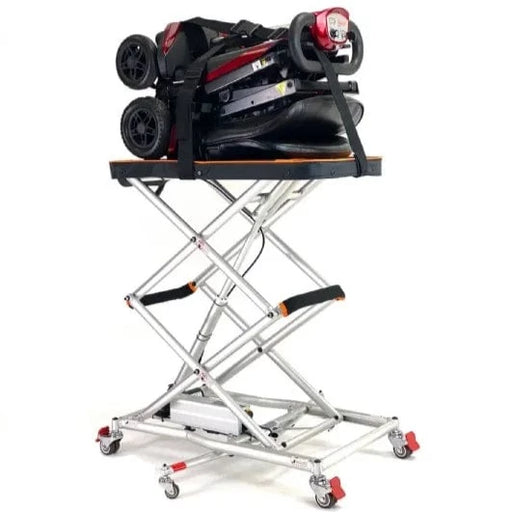
External lifts mount on the hitch and suit trucks with limited internal cargo space. Internal lifts install inside the vehicle and offer better protection from weather, though they require enough room in the bed. Hybrid lifts extend outside the vehicle so the rider can drive onto the platform, then automatically lift and pull the scooter inside the transit vehicle. Vertical platform lifts raise the scooter straight up from ground level for riders who cannot drive it up a ramp.
Cost Considerations
Pricing varies widely depending on the lift’s mechanism, weight capacity, and brand. Portable manual and entry-level electric lifts sit at the lower end of the range, while fully automatic exterior carriers with higher weight capacities cost more. Professional installation, where needed, adds to the total, so it is worth budgeting for the lift, any required hitch work, and ongoing maintenance together rather than considering the purchase price alone.
Find the Right Fit for Every Trip
Matching a scooter lift to the right truck and the right scooter makes every outing easier, whether that means a medical appointment, a shopping trip, or a weekend getaway. Anyone who also needs to move heavier mobility equipment or multiple riders may want to browse the carrier collection for additional options built around different vehicle setups.