Understanding Wheelchair Lifts
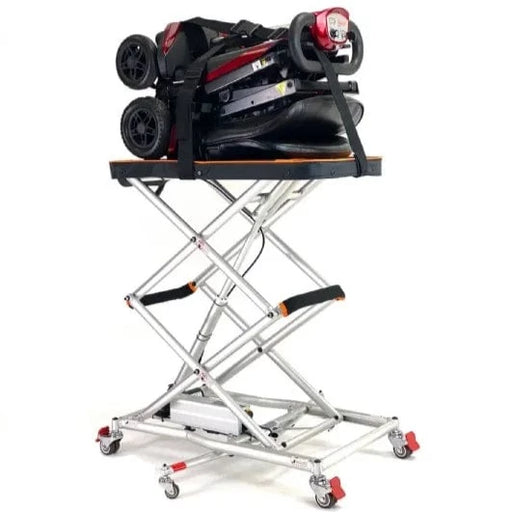
A wheelchair lift is a mechanical device built to move a scooter or power wheelchair from ground level into a vehicle. These lifts serve people who need a reliable, repeatable way to transport their equipment, for medical appointments, errands, or recreational outings, without depending on a second person every single time.
If you're comparing this category against equipment built specifically for mobility scooters, browse the scooter lifts collection, which covers lift designs built around scooter dimensions and weight ranges. For those on the go, our scooter lifts and wheelchair lifts offer the perfect solution for transporting your mobility device with your vehicle, giving you the freedom to travel with convenience and independence.
Why a Portable Lift Matters
Loading a mobility folded scooter or power chair into a vehicle often requires lifting 50 to 100 lbs over a trunk or cargo lip. This can be difficult for many users and places caregivers at risk of back and shoulder injuries from repeated lifting. A portable wheelchair lift removes that physical effort by raising and lowering the device at the push of a button.
More importantly, it makes regular travel practical. When transporting a scooter no longer requires heavy lifting, users can take their mobility device to medical appointments, stores, family visits, and vacations without relying on someone else’s strength. For many households, a lift doesn’t just make loading easier; it makes the scooter usable away from home.
Types of Wheelchair Lifts
Wheelchair lifts generally fall into a few categories:
Portable Vehicle Lifts
Portable vehicle lifts are compact, self-contained units that mount inside a trunk, SUV cargo area, or van interior and hoist a folded scooter or power chair up and inside. Some models weigh as little as 25 lbs with the battery included, light enough for a single adult to carry, install, and remove without help. Typically, these units run on the vehicle’s onboard battery or their own rechargeable pack.
Because no permanent structural modification is required, portable lifts are a practical option for renters, multi-vehicle households, or anyone who does not want to commit to a fixed hitch-mounted system.
Platform and Hitch-Mounted Lifts
Some wheelchair lifts mount externally to a vehicle’s hitch receiver and carry the mobility device on a platform at the rear of the vehicle rather than inside it. This style works well for larger or heavier scooters that do not fit easily inside a trunk.
Anyone specifically shopping for this style of exterior, hitch-based equipment may want to compare options in the carriers collection, which covers vehicle-mounted carrier systems built for that use case.
Choosing the Right Wheelchair Lift
Selecting the right lift comes down to matching the equipment to both the vehicle and the mobility device being transported:
Vehicle Compatibility
Trunk space, cargo area height, and whether a vehicle has a hitch receiver all affect which lift style will actually work. A sedan with a shallow trunk, for instance, calls for a very different solution than an SUV or minivan with generous interior cargo room.
Before purchasing, measure the folded dimensions of your scooter or power chair and compare them against the cargo area of your specific vehicle. This is because cargo height and width vary across vehicle classes, and a lift that fits one vehicle may not clear the opening of another.
Scooter or Power Chair Weight
Every lift has a maximum rated weight capacity. Check this figure against the fully loaded weight of the scooter or power chair, including the battery, which can add 15 to 30 lbs to the total depending on the model. Also, choose a model with some buffer above the expected load.
If you're still deciding between a manual wheelchair and a powered scooter for daily use, review the manual wheelchairs collection.
Ease of Setup and Portability
Some users prioritize a lift that can move between vehicles or be removed entirely when not needed. Others prefer a more permanent setup. Lightweight portable lifts favor flexibility: remove them for a road trip where you need full cargo space, and reinstall them when routine errands resume.
Installation and Setup
Portable wheelchair lifts are generally designed to be easy to set up without professional installation. Most units anchor into place within the trunk or cargo area and connect to a power source, either the vehicle’s battery or the lift’s own rechargeable pack.
Read the manufacturer’s instructions fully before first use. Then confirm the mounting points and clearance in your specific vehicle before loading anything.
Ongoing Maintenance
Keeping a portable lift in good working condition mostly comes down to routine care. Before each use, check that the lifting arm moves freely and that battery connections are secure. Charge the battery on a regular schedule, even during stretches when the lift is sitting unused. This is because battery degradation from prolonged discharge is one of the most common causes of unexpected failures.
Wheelchair Lifts for Different Mobility Needs
Not every household relies on the same type of mobility equipment, and matching the lift to what you actually own matters as much as matching it to your vehicle. Someone shopping for the first time may still be comparing mobility scooters themselves. In that case, check the scooter’s folded dimensions and weight against a lift’s specifications before buying either one to prevent a mismatch that is expensive to undo.
When a Patient Lift Is the Better Fit
For caregivers who need to move a person directly, rather than loading a folded scooter or wheelchair, a different category of equipment applies entirely. The patient lifts collection covers sling-style and stand-assist lifts built specifically for transferring a person, which serve a different purpose compared to the vehicle-loading lifts covered on this page.
Wheelchair Lifts for Safer, Easier Vehicle Loading
A wheelchair lift loads your scooter or power chair into a vehicle at the push of a button, so you never have to lift 50 to 100 lbs of equipment by hand. Choose a portable lift for trunk or SUV storage, or a hitch-mounted platform for larger scooters. Browse our full range above, or contact our team for help matching the right lift to your vehicle and mobility equipment