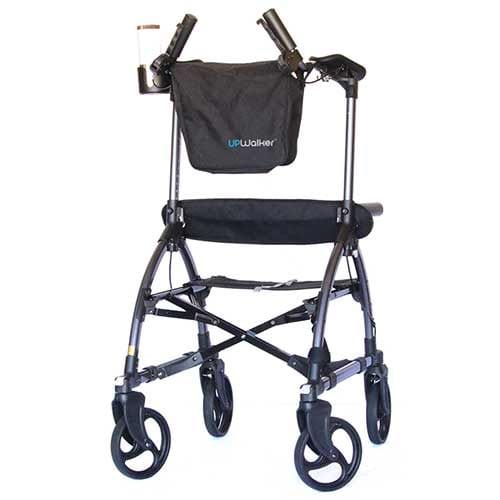
Stand Up Walker for Seniors
Choosing the right stand-up walker for seniors starts with understanding why standard walkers fall short for so many users.
The Ultimate Mobility Solution
Standard walkers position handles low enough that users must lean forward to grip them, increasing lumbar compression, shifting the center of gravity forward, and raising fall risk over time. A stand-up walker redistributes weight through upright or forearm support handles, reducing strain on the lower back and cervical spine and keeping the center of gravity where it belongs.
This design suits adults recovering from hip or knee replacement surgery, as well as those managing Parkinson’s disease, osteoporosis, or chronic lower back pain who cannot safely hunch over a conventional walker. Occupational therapists also note that maintaining an upright gait supports improved confidence and social engagement in older adults, making the benefits as much about quality of life as physical safety.
Stand Up Walker with Seat for Adults
Standing support is only half the equation for many users; the other half is having a reliable place to rest mid-outing.
Comfortable and Convenient
A stand-up walker with seat for adults is a versatile choice for those who need a quick rest during their walks. Most models feature seats rated to support 250 to 300 lbs and positioned 19 to 22 inches from the floor, making it easy to sit and stand without straining. These models are particularly useful for individuals managing COPD, heart failure, or post-surgical fatigue who need to pause every 50 to 100 feet during community ambulation.
When comparing models, prioritize a padded seat over a hard one. Users who sit frequently notice a meaningful difference in comfort, especially on longer outings like shopping trips or walks in the park.
Stand Up Rollator Walker
Combining upright support with rolling mobility opens up a smoother walking experience than either a traditional walker or a traditional rollator offers on its own.
Smooth Mobility with Enhanced Support
A stand-up rollator walker combines the stability of a traditional walker with the smooth rolling mobility of a rollator. Unlike a standard 4-wheel rollator, a stand-up rollator positions the handles at a height that keeps the torso upright, typically 38 to 44 inches from the floor, rather than forcing a forward lean.
Braking systems matter here, especially for users with reduced hand strength. Loop brakes, which you squeeze to slow and push down to lock, are generally easier to engage than trigger brakes for users with arthritis or limited grip. For wheel size, 8-inch wheels handle outdoor pavement and slight inclines well, while 6-inch wheels suit smooth indoor floors better.
Stand Straight Walker
Posture is the throughline across every model in this collection, and the stand straight walker category makes that priority explicit.
Promoting Good Posture and Balance
This stand straight walker category is specifically designed to help users maintain an upright posture. These walkers encourage a natural walking position, which can reduce discomfort and improve balance, and they suit anyone looking to improve posture while getting the support they need.
Key Features of Stand Up Walkers
A handful of specific features separate a genuinely well-built stand-up walker from one that merely looks similar on the shelf.
-
Ergonomic Handles: Forearm cuffs or upright grip handles reduce wrist extension versus standard grips, lowering carpal tunnel risk on longer walks.
-
Adjustable Height: Handle height should align with the wrist crease standing upright, typically 32 to 38 inches for adults between 5’0" and 6’2”.
-
Durable Frame: Most frames support 250 to 350 lbs, with bariatric models extending to 400 lbs or more.
-
Easy Folding Mechanism: Most models fold to under 12 inches wide, fitting standard car trunks for storage and transport.
-
Lockable Brakes: Parking brakes engage when seated, preventing the walker from rolling away, especially important for balance disorders or post-surgery recovery.
-
Spacious Seat: Padded options are available for users who sit frequently throughout the day.
-
Forearm and Elbow Support Pads: Padded armrests offload weight from the wrists and hands, useful post-stroke or for arthritis management.
-
Ample Storage: Many models include built-in storage for personal items, medications, or a water bottle.
Featured Models in This Collection
Two models illustrate the range well: one built for lightweight portability and one built for full-featured daily support.
UpWalker Breeze Lightweight Folding Upright Rollator
At 18 lbs, the UpWalker Breeze is one of the more portable options in this collection and a good match for anyone prioritizing ease of transport. It supports up to 300 lbs, folds down to 23.6 by 10.6 by 13.4 inches, and includes loop brakes with a lock feature, plus swivel front wheels for maneuverability. The seat sits at 21 inches with an adjustable overall height range of 31 to 38 inches, and it carries a 1-year limited warranty.
UpWalker Standard Upright Walker Rollator With Seat and Brakes (H200)
The UpWalker Standard is built for users who want the full feature set: four large 8-inch wheels, a padded seat and backrest, adjustable armrests, a storage basket, and easy-to-use hand brakes. It comes in two sizes: a Standard version for users 4’7" to 5’10” with a 300 lb weight capacity, and a Large version for users 5’10" to 6’5” with a 350 lb capacity, which makes the Large size worth comparing against the bariatric rollator category for heavier users. The frame carries a lifetime warranty, with wearable parts and accessories covered for 6 months.
Rollator Stand Up Walker
Beyond the two featured models above, the broader rollator stand-up walker lineup spans both 3-wheel and 4-wheel configurations, available for tighter indoor spaces or outdoor stability. See the Stand Up Rollator Walker section above for full brake type and wheel size guidance.
High Standing Rollator
Taller users are often underserved by standard rollator sizing, which is where the high standing category fills a real gap.
Elevated Design for Maximum Comfort
High standing rollators typically offer handle heights of 40 to 46 inches, accommodating users up to 6’4" without a forward lean. Standard rollators max out around 38 inches, leaving anyone over 6’0” with no good option until they find a high-standing model. Taller frames also benefit from a wider wheelbase, at least 22 inches, for lateral stability on uneven surfaces.
Stand Up Walker With Seat
Some conditions call for frequent rest as much as postural support, which is exactly what this category is built around.
The Perfect Blend of Support and Rest
For users managing multiple sclerosis or post-cancer fatigue, a stand-up walker with seat provides a stable frame and a built-in rest point without requiring a separate chair, suiting shopping trips, walks in the park, or moving around the home. For needs beyond what a rollator can provide, comparing it with a walker-wheelchair hybrid is worth doing before committing to either category alone.
Choosing Your Stand Up Walker
A few practical checks make the difference between a walker that fits well and one that gets returned within a month.
Height Fitting and Condition-Specific Guidance
Standing upright with your arms relaxed at your sides, the handle should align with your wrist crease. For forearm-support models, the elbow pad should sit with the elbow bent at 90 degrees. Priorities vary by condition: back pain or scoliosis calls for forearm support pads and an upright handle angle; recovery from hip or knee replacement calls for a seat height of 19 inches or more and locking brakes; Parkinson’s disease calls for loop brakes, easier to engage with tremor, and a bright-colored frame for visibility; and tall users, 6’0" and above, need a high-standing rollator with handle height between 40 and 46 inches.
Weight Capacity, Wheel Size, and Portability
Standard models support 250 to 300 lbs, while bariatric frames support 400 lbs or more, so confirm the frame rating against your actual body weight. For primarily indoor use, 6-inch wheels and a narrower frame (24 inches wide or less) navigate doorways more easily. For outdoor or mixed use, 8-inch wheels and a wider wheelbase improve stability on uneven surfaces. Anyone who travels often should look for a walker that folds to under 12 inches wide.
Medicare and Insurance Coverage
Many stand-up walkers qualify as Durable Medical Equipment under Medicare Part B with a physician’s prescription. Relevant coverage codes include E0143 for wheeled walkers and E0141 for non-wheeled models, though coverage details vary, so confirm eligibility with a provider before purchasing.