Overview of Lightweight Travel Wheelchairs
Choosing a lightweight travel wheelchair starts with one question most buyers overlook: does the user need to push themselves, or will a caregiver be doing the pushing? Most lightweight travel wheelchairs fall into two categories. Caregiver-push transport chairs feature smaller 8- to 12-inch rear wheels, while self-propelling wheelchairs use 24-inch rear wheels that allow independent movement. Knowing which type is needed is the single most important decision before comparing weight or price, and it also determines fit for terrain: smooth indoor surfaces are well served by solid-wheel transport chairs, while sidewalks, gravel paths, or outdoor venues call for pneumatic tires or a larger rear wheel diameter for better roll-over capability.
Weight is the next filter. True ultra-lightweight models, sometimes called featherweight chairs, come in under 15 lbs, with some titanium-frame options reaching as low as 13 lbs. Anyone prioritizing the lowest possible weight should look specifically at the ultra-light transport chair collection. Most travel chairs weigh between 15 and 20 lbs and use aluminum frames, striking a reliable balance between strength and portability. Higher-end models use aircraft-grade aluminum alloy or titanium, shaving an additional 2 to 4 lbs without sacrificing the 250 to 300 lb weight capacity most users require.
For anyone still deciding between a manual wheelchair and a different mobility aid entirely, this guide to mobility scooter alternatives is a useful starting point.
Lightweight Travel Wheelchair Product Types
This collection features different types of lightweight travel wheelchairs built for different needs, from basic chairs for short trips to compact models for tight spaces.
Basic Lightweight Travel Wheelchairs
These chairs prioritize simple, easy-to-use mobility for short-term use. At 15 to 20 lbs, they suit quick trips where portability matters most, with solid rubber wheels designed for indoor surfaces like hospital corridors, malls, and airports. Solid wheels require zero maintenance and eliminate the risk of a flat tire mid-trip, but they offer less cushioning on cobblestone or uneven outdoor terrain than pneumatic tires, so they work best on smooth, predictable surfaces. Standard seat widths run 16 to 18 inches; confirm the measurement before ordering to avoid discomfort during extended sitting.
-
Weight: 15 to 20 lbs
-
Key Features: Foldable frame, compact design, flat-free solid wheels
-
Best for: Short-term use, travel, indoor mobility
Adjustable Lightweight Travel Wheelchairs
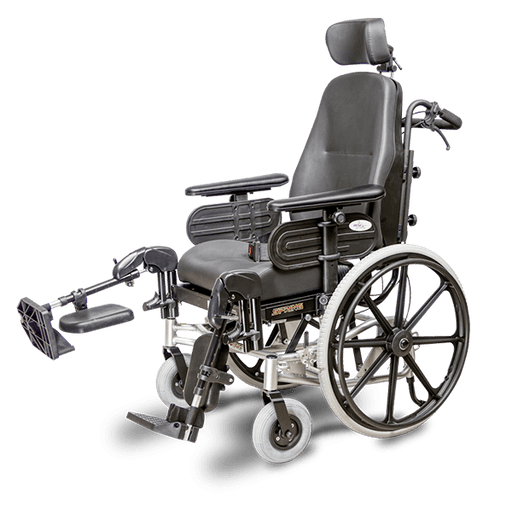
For a more customizable lightweight wheelchair suited to long-term or frequent use, adjustable models are the better fit. They weigh slightly more, around 20 to 25 lbs, but add adjustable footrests, armrests, and backrests that make a real difference during extended hours in the chair. Backrests in this category recline between 90 and 120 degrees, which reduces pressure on the lower spine during flights or long drives.
Some adjustable models push toward the upper limit of what counts as lightweight, so if total pack weight matters, such as for airline baggage, prioritize models at 20 to 22 lbs with the specific features actually needed rather than defaulting to the most adjustable option available.
-
Weight: 20 to 25 lbs
-
Key Features: Adjustable backrest recline, adjustable footrests, and armrest height
-
Best for: Long-term use, customizable comfort, extended travel periods
Compact Lightweight Travel Wheelchairs
For users who need a chair to fit into tight spaces, compact folding wheelchair models fold down to about 11 to 13 inches wide when collapsed, weigh 15 to 18 lbs, and are easy to slide into a car trunk, store under a hotel bed, or gate-check at the jetway. Look for a folded depth under 12 inches and a carry bag or strap included. Those details separate genuinely travel-ready chairs from models that are merely foldable, and they make the difference between a smooth handoff at the jetway and a struggle to repack.
-
Weight: 15 to 18 lbs
-
Key Features: Ultra-compact foldability, gate-check ready, car trunk and hotel room storage
-
Best for: Space-constrained situations, frequent air travel, public transportation
Lightweight Travel Wheelchair Sizing Guide
Getting the right fit matters as much as getting the right weight. A wheelchair that is too wide or too narrow causes discomfort, pressure sores, or difficulty maneuvering through doorways, and those problems rarely show up until the trip is already underway.
|
Measurement
|
How to Take It
|
|
Seat Width
|
Measure hips at the widest point while seated, and add 1 to 2 inches for clearance. Most travel chairs are 16 or 18 inches wide.
|
|
Seat Depth
|
Measure from the back of the hip to the back of the knee. Standard depth is 16 inches. Too much depth presses behind the knee; too little causes forward sliding.
|
|
Back Height
|
Measure from the seat surface to the top of the shoulder. Standard back heights run 16 to 18 inches; taller users may need an adjustable backrest.
|
|
Armrest Height
|
Measure from the seat surface to the bottom of the elbow with the arm relaxed at the side. Armrests set too high cause shoulder tension; too low offers no support.
|
|
Weight Capacity
|
Choose a chair rated at least 20 to 30 lbs above the user’s body weight. For users over 250 lbs, look specifically for bariatric-rated travel chairs with reinforced frames.
|
Anyone between seat-width sizes should size up rather than down, since a slightly wider seat is easier to manage than one that creates pressure points at the hips. For anyone considering the beach or other soft, uneven terrain, a dedicated beach wheelchair is usually a better fit than a standard travel model, since those chairs use wide, low-pressure tires built specifically for sand.
Questions about fit can be directed to our expert team. We're available 24/7 to answer your questions and help you make an informed decision.